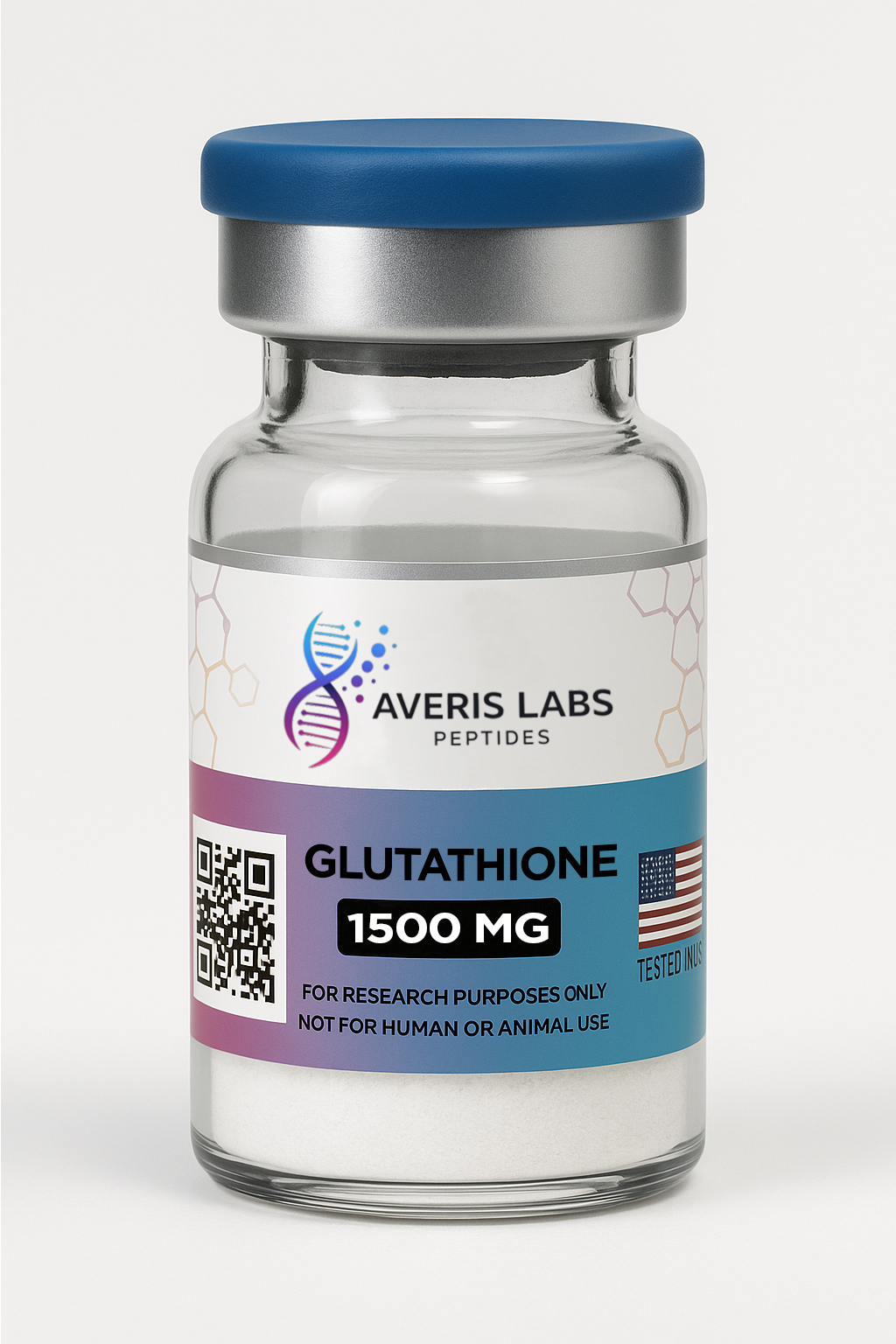
Glutathione (γ-L-glutamyl-L-cysteinyl-glycine) is a naturally occurring tripeptide found ubiquitously across mammalian cell systems. As one of the most extensively studied intracellular antioxidants, GSH has become a foundational compound in oxidative stress research, redox biology, and cellular defense mechanism studies.
Research Interest Areas
Glutathione is actively investigated in laboratory settings across a wide range of disciplines, including:
- Redox signaling — studied for its role in maintaining intracellular oxidative balance and thiol-disulfide homeostasis
- Detoxification pathway modeling — explored in research examining phase II metabolic enzyme activity and xenobiotic conjugation
- Immune cell function studies — investigated for its presence and activity in lymphocyte and macrophage research models
- Mitochondrial integrity research — evaluated in models examining oxidative phosphorylation and mitochondrial membrane potential
- Cellular aging mechanisms — a subject of interest in senescence and longevity pathway research
Technical Specifications
| Parameter | Detail |
|---|---|
| Form | Lyophilized powder |
| Purity | ≥99% (HPLC verified) |
| Composition | Reduced form (L-GSH) |
| Reconstitution | Sterile or bacteriostatic water |
| Storage | 2–8°C, away from light and moisture |
| Handling | Protect from oxidizing environments; use promptly upon reconstitution |
Classification & Structure
Glutathione is a linear tripeptide composed of glutamate, cysteine, and glycine residues, linked by a gamma-peptide bond between glutamate and cysteine. It exists predominantly in its reduced form (GSH) within healthy cell systems and serves as the primary substrate for glutathione peroxidase and glutathione S-transferase enzyme families — both of which are central subjects in antioxidant and detoxification research.
This product is intended for in vitro and laboratory research purposes only. Not for human or veterinary use. Not intended to diagnose, treat, cure, or prevent any disease or condition.