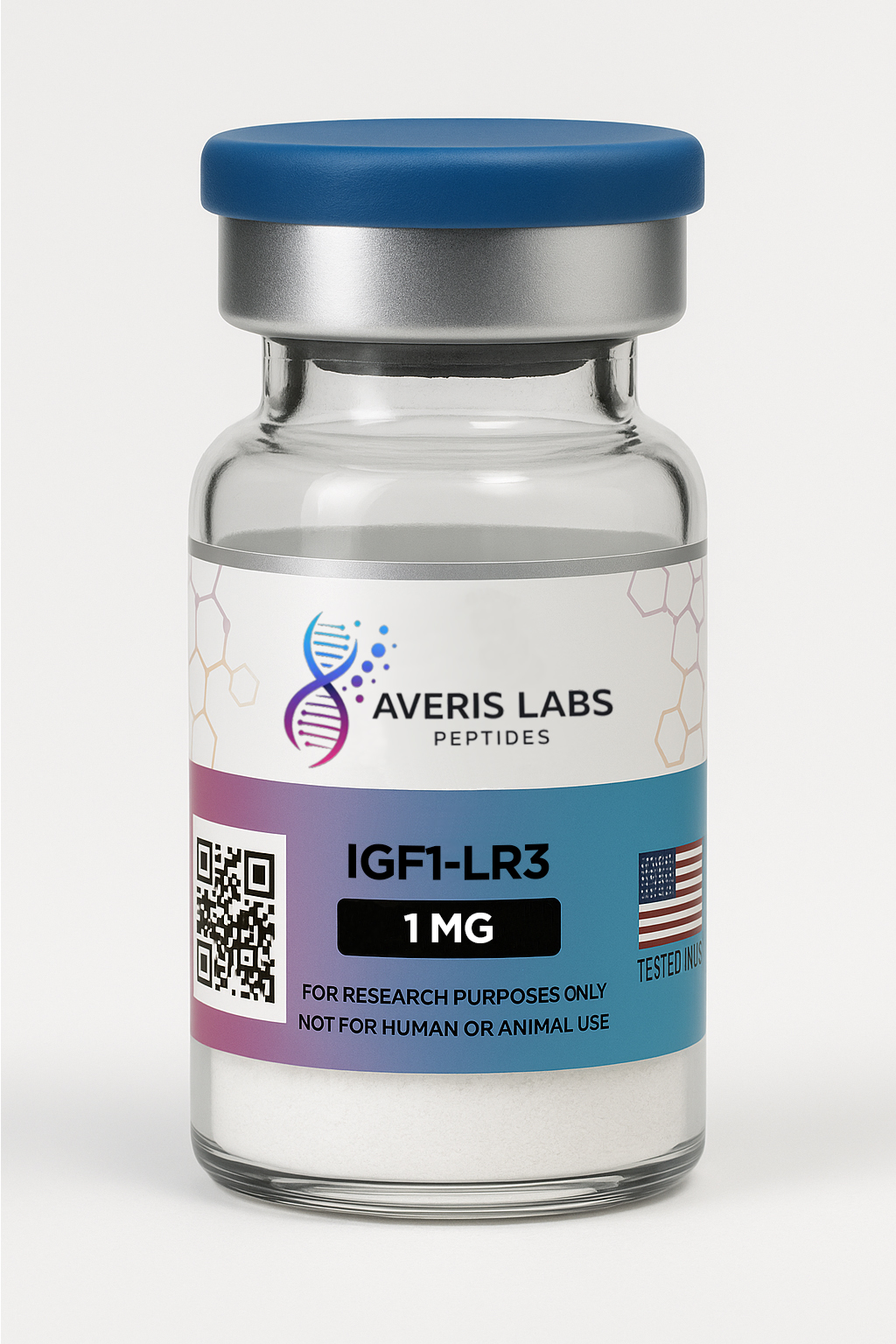
IGF1-LR3 is a synthetic, recombinant analog of mammalian Insulin-like Growth Factor-1. It is specifically engineered for enhanced potency and a significantly extended biological half-life compared to native IGF-1. This is achieved through a structural modification involving an Arginine substitution at the 3rd position and a 13-amino acid N-terminal extension. In laboratory settings, it is a primary tool for studying long-term cell proliferation and the inhibition of apoptosis.
Key Research Focus Areas:
-
Cell Proliferation and Hyperplasia Modeling: Studied for its role in stimulating the division and growth of various cell types, including satellite cells, myoblasts, and osteoblasts.
-
Metabolic Pathway Signaling: Investigated for its ability to enhance glucose transport and amino acid uptake across cellular membranes, mimicking certain insulin-like activities.
-
Binding Protein Interaction: Evaluated for its reduced affinity for IGF-binding proteins (IGFBPs), allowing for higher concentrations of “free” peptide to interact with the IGF-1 receptor (IGF1R).
-
Cytoprotective and Anti-Apoptotic Research: Studied for its role in activating the PI3K-Akt signaling pathway to support cellular survival under stressed conditions.
Technical Details:
-
Purity: 98%+
-
Form: Lyophilized powder
-
Vial Content: 1mg
-
Storage: Store at -20°C for long-term stability. After reconstitution, stability is limited to approximately 7 days at 2–8°C.
-
Reconstitution: Bacteriostatic Water
-
Molecular Weight: ~9.1 kDa (83 amino acids)