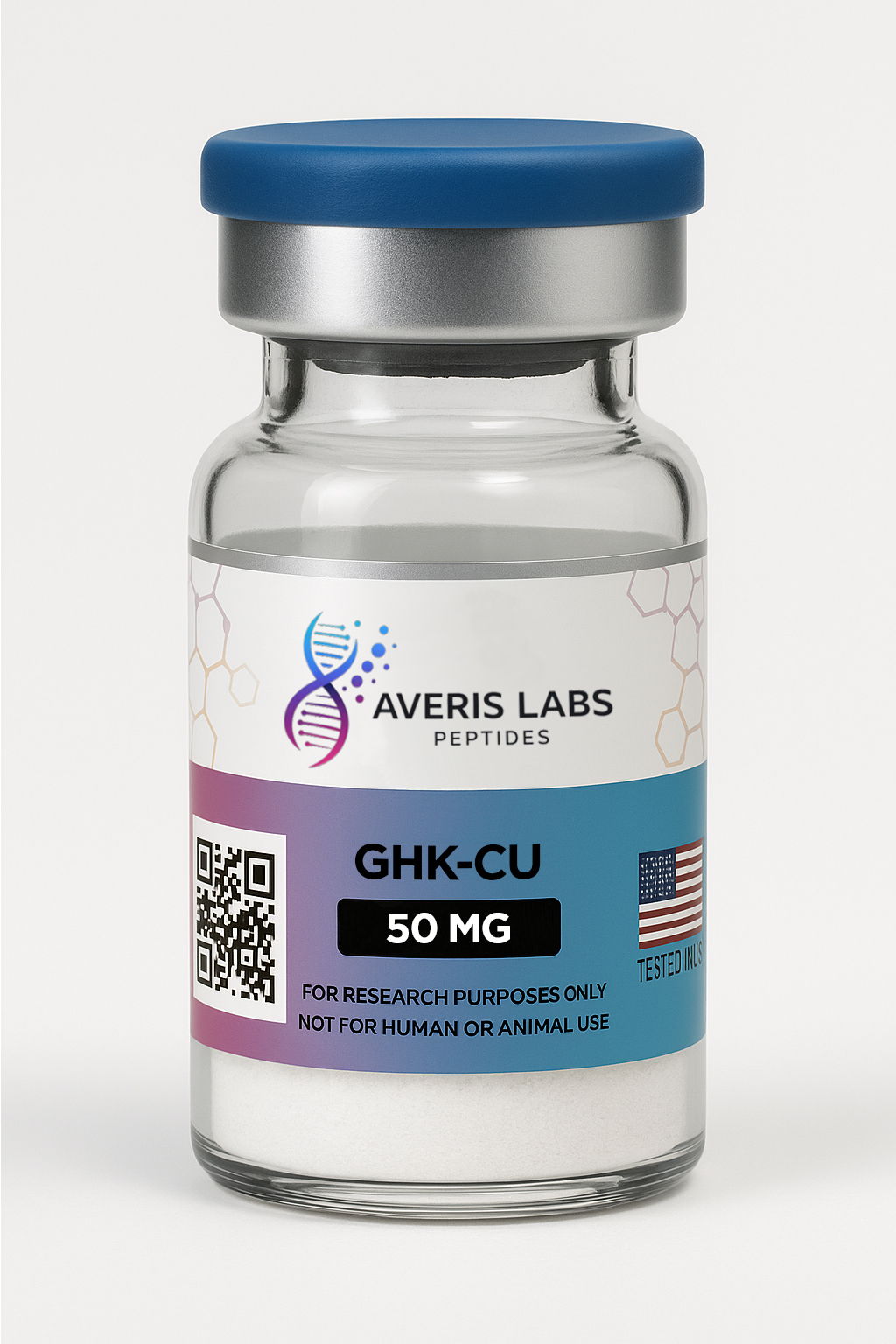
GHK-Cu is a naturally occurring copper complex first identified in human plasma. It has gained significant attention in regenerative medicine and cellular biology for its role as a signaling peptide. By modulating the expression of a large number of human genes, it is extensively studied for its potential to support tissue remodeling, collagen synthesis, and antioxidant defense mechanisms.
Key Research Focus Areas:
-
Investigated in dermal remodeling: Studied for its ability to stimulate collagen, elastin, and glycosaminoglycan synthesis in skin research models.
-
Explored for wound-healing mechanisms: Evaluated for its role in chemoattraction of immune cells and activation of fibroblasts.
-
Studied in neuroprotective pathways: Investigated for its potential to support nerve regeneration and mitigate oxidative stress.
-
Evaluated for anti-inflammatory signaling: Research focused on its ability to lower pro-inflammatory cytokines and increase antioxidant enzymes like superoxide dismutase.
Technical Details:
-
Purity: 99%+
-
Form: Lyophilized peptide (typically appears as a distinct blue powder due to copper content)
-
Vial Content: 50mg
-
Storage: Refrigerate upon arrival (2–8°C) for long-term stability.
-
Reconstitution: Bacteriostatic water or sterile water for injection.
-
Precautions: Protect from heat, moisture, and direct light; avoid mixing with strong antioxidants (like Vitamin C) in the same solution as they may destabilize the copper complex.
Classification & Structure:
-
Glycyl-L-histidyl-L-lysine copper complex: A tripeptide with a high affinity for copper (II) ions.
-
Regenerative signaling peptide: Based on research involving gene modulation and extracellular matrix (ECM) maintenance.