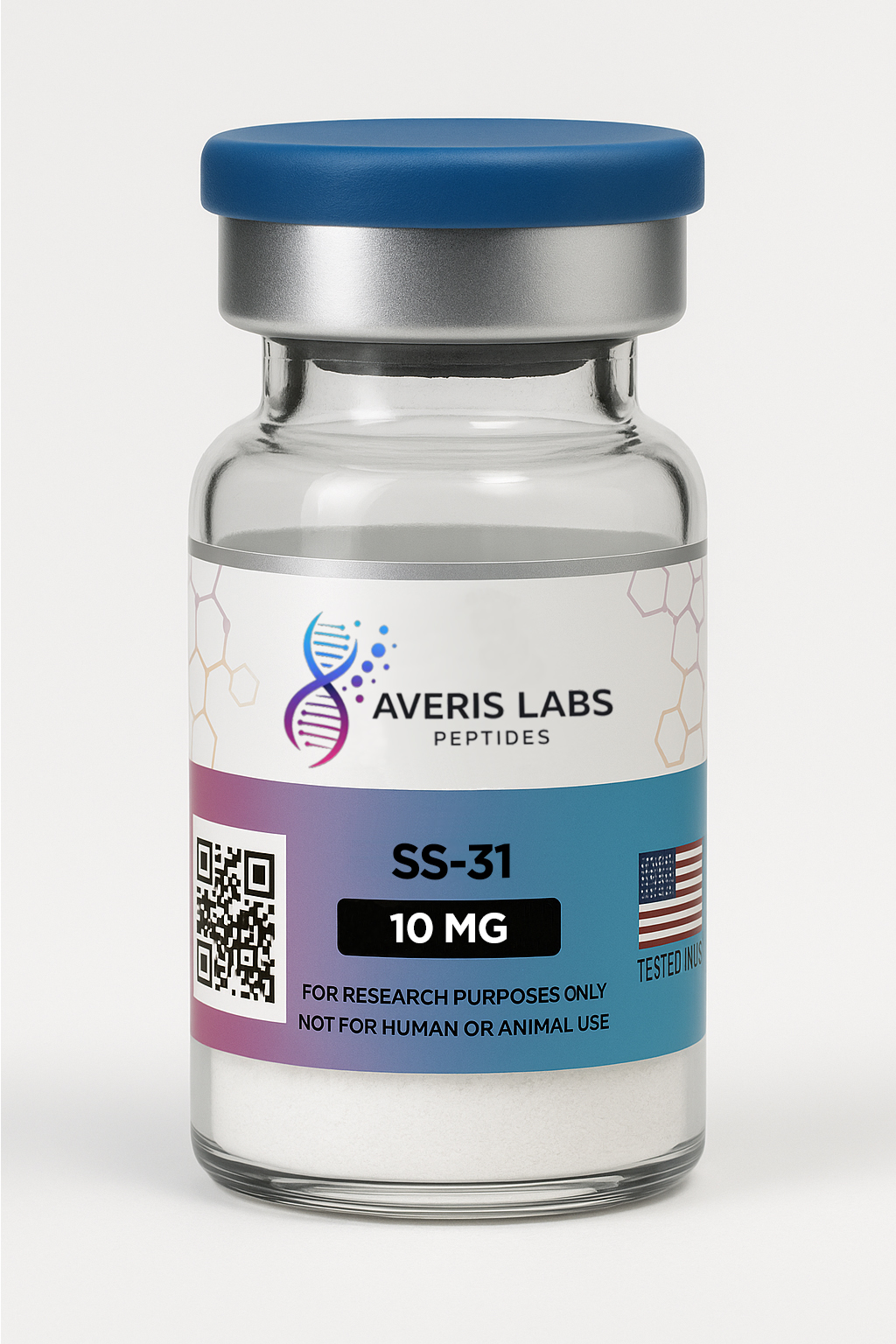
SS-31 (also known as Elamipretide) is a synthetic, water-soluble tetrapeptide belonging to the Szeto-Schiller (SS) family. It is a highly specialized tool in cellular biology used to investigate mitochondrial bioenergetics and membrane stability. Its unique cationic-hydrophobic structure allows it to target the inner mitochondrial membrane (IMM) with high selectivity.
Core Research Objectives
The primary focus of SS-31 in laboratory and in vitro studies includes:
-
Cardiolipin Interaction: Investigation into the peptide’s high-affinity binding to cardiolipin, a phospholipid essential for the structural integrity of the inner mitochondrial membrane.
-
Electron Transport Chain (ETC) Optimization: Researching how the stabilization of mitochondrial cristae influences the formation of respiratory “supercomplexes” and ATP production efficiency.
-
Oxidative Stress Modulation: Evaluating the peptide’s ability to reduce electron leakage and the subsequent generation of reactive oxygen species (ROS) during cellular respiration.
-
Permeability Pore Dynamics: Studying the mechanisms by which the peptide inhibits the opening of the mitochondrial permeability transition pore (mPTP) under chemical stress.